Gardening
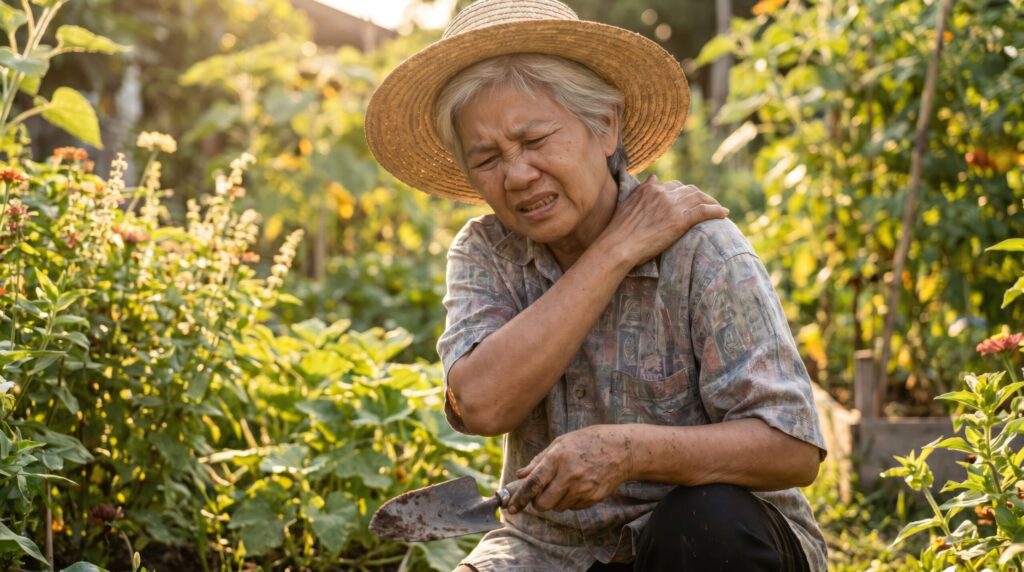
Spring and summer bring the urge to get outside and tend to gardens, lawns, and flower beds. But hours spent kneeling, squatting, and bending can leave you with sharp knee pain, tight hips, and a sore lower back. These are not just minor aches—they are signs that your joints and muscles are working overtime in positions your body isn’t designed to hold for extended periods.
Repetitive kneeling compresses the knee joints and strains the soft tissues around them. Squatting and bending forward shift stress to your lower back and hip flexors. Over time, this postural strain can misalign your spine and joints, causing inflammation and pain that lingers long after you’ve put away the gardening tools.
Gardening Positions Strain Your Joints
When you kneel for gardening, your knee joints bear concentrated pressure. Your hip flexors tighten from the bent-knee position, and your lower back compensates by over-extending or rotating unevenly. This compensation pattern can pull your pelvis out of alignment, which then affects your entire kinetic chain—knees, hips, and spine all suffer the ripple effect.
Squatting while weeding or planting adds another layer of stress. If your ankles, knees, or hips aren’t moving freely, your lower back takes the load instead. Combine this with repetitive twisting motions, and you’ve created a perfect storm for musculoskeletal dysfunction.
Chiropractic Adjustments Restore Alignment
Chiropractic care addresses the root cause of gardening-related pain: joint misalignment and restricted mobility. When your chiropractor performs adjustments to your spine, pelvis, knees, and hips, they restore proper alignment and improve how these joints move together. This isn’t just pain relief—it’s restoring your body’s mechanical efficiency.
A chiropractic adjustment can:
- Realign vertebrae and pelvis that have shifted due to repetitive bending and kneeling
- Relieve pressure on nerves that may be causing radiating pain into your legs or feet
- Improve joint mobility so your knees and hips absorb impact more effectively
- Reduce inflammation in joints and surrounding soft tissues
Combine Adjustments with Massage Therapy
While chiropractic adjustments fix alignment, massage therapy releases the muscle tension that gardening creates. Your hip flexors, quadriceps, glutes, and lower back muscles all tighten from kneeling and squatting. Massage breaks up this tension, improves blood flow, and speeds recovery so you can get back to your garden without pain.
Many patients find that combining chiropractic adjustments with therapeutic massage produces faster, longer-lasting relief than either treatment alone.
Tips to Prevent Gardening Pain
Beyond chiropractic care, a few simple habits can protect your joints:
- Use a kneeling pad or cushion to reduce direct pressure on your knee joints
- Take regular breaks to stand, stretch, and change positions
- Bend at your hips and knees instead of rounding your lower back
- Keep your core engaged while lifting soil bags or large plants
- Wear supportive shoes with good arch support
If kneeling and squatting have left you with persistent knee, hip, or lower back pain, chiropractic care can help realign your joints and get you back to enjoying your garden. The sooner you address misalignment, the faster your recovery and the less risk of developing chronic pain patterns. Schedule a consultation with Dieringer Chiropractic Health Clinic to discuss your gardening-related discomfort and find a treatment plan that works for you.
Ready to talk? Call (708) 478-0620 or visit our contact page.