Desk Posture and Stress
The Hidden Cost of Poor Desk Posture
If you spend most of your day hunched over a keyboard, you’re not alone. Millions of desk workers struggle with slouching, often without realizing the cumulative damage it causes. What feels like a comfortable position in the moment can lead to serious musculoskeletal problems over weeks, months, and years.
Slouching Affects Your Spine and Neck
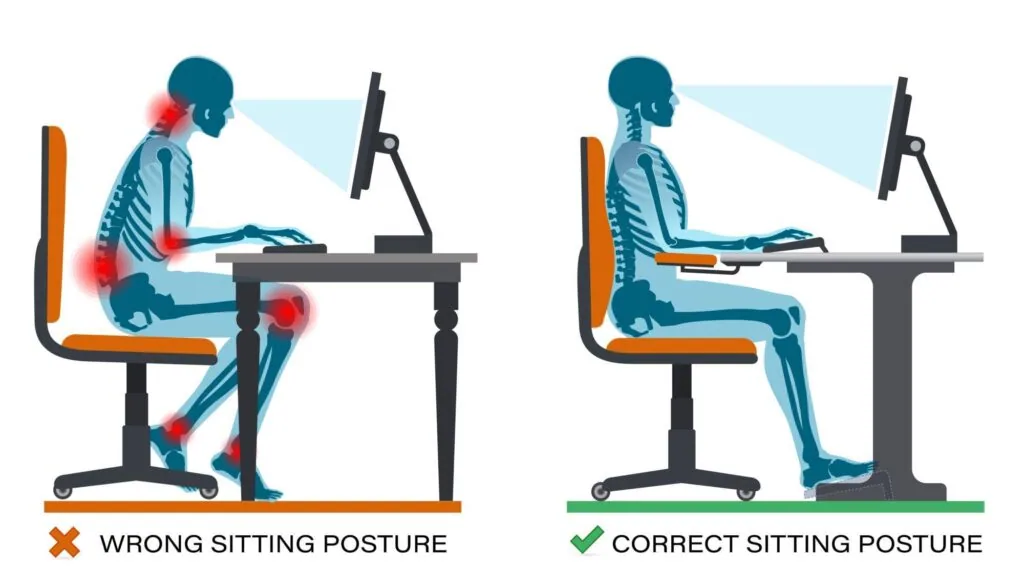
When you slouch, your head naturally drifts forward. This forward head posture shifts the weight distribution across your cervical spine. Instead of your neck muscles supporting your head’s weight evenly, they become overloaded and fatigued. Over time, this imbalance stresses the discs between your vertebrae and triggers tension in the muscles of your upper back and shoulders.
Your lower back suffers too. Slouching flattens the natural curve of your lumbar spine, placing excessive pressure on your intervertebral discs. This constant strain can eventually lead to disc herniation, chronic lower back pain, and reduced mobility.
Common Pain Conditions Linked to Desk Slouching
Neck pain and headaches are among the most immediate complaints. The forward head posture tightens muscles at the base of your skull and along your cervical spine, often triggering tension headaches or migraines.
Shoulder and upper back tightness develop as your trapezius and rhomboid muscles work overtime to compensate for poor alignment. Many desk workers describe this as a constant ache or knot-like sensation between the shoulder blades.
Lower back pain emerges gradually as the lumbar spine loses support. Without proper alignment, you’re essentially asking your discs and ligaments to carry loads they’re not designed to bear.
Posture Fixes You Can Start Today
Correcting your desk setup is the first line of defense. Position your monitor at eye level so you’re looking straight ahead, not down. Your elbows should rest at a 90-degree angle when your arms are at rest. Your feet should be flat on the floor or a footrest, and your lower back should maintain a gentle curve—consider using a lumbar support cushion.
Take frequent breaks to stand and stretch. Every 30 minutes, stand up, roll your shoulders backward, and gently extend your spine. These micro-breaks interrupt the slouching cycle and remind your muscles of proper alignment.
Strengthen your core and back muscles through targeted exercises. A stronger core stabilizes your spine and makes good posture feel less effortful. Even simple exercises like planks and rows can make a noticeable difference over time.
Professional Care Makes the Difference
Self-care and ergonomic improvements are essential, but they’re often not enough if you’ve already developed chronic pain or postural imbalances. This is where chiropractic care becomes invaluable. Dr. Dieringer can assess your spinal alignment, identify specific areas of restriction or misalignment, and correct them through targeted adjustments.
Beyond adjustments, Dr. Dieringer includes personalized posture training and ergonomic guidance tailored to your unique work environment. Many desk workers benefit from massage therapy as well, which releases muscle tension and complements the structural corrections made through chiropractic adjustment.
At Dieringer Chiropractic Health Clinic, we work with Mokena patients who spend their days at a desk. We’ve helped countless people break the slouching cycle, reduce their pain, and restore proper spinal function. Our patients consistently report improved comfort, better posture awareness, and a significant reduction in headaches and neck pain after beginning treatment.
Your Path to Better Posture
Slouching might feel harmless in the short term, but the long-term consequences are real and often preventable. By combining workplace ergonomics, regular movement, targeted exercises, and professional chiropractic care, you can protect your spine and maintain your quality of life for years to come. The best time to address your posture is now—before chronic pain becomes the norm.
Ready to take control of your spinal health? Schedule a consultation with Dieringer Chiropractic Health Clinic to discuss your posture concerns and develop a personalized treatment plan. Call (708) 478-0620 to book your appointment today.